• Skip to content
  • Skip to primary sidebar

liskow_lewis_white_new

future-focused

  • Team
  • Practices
  • Insights
  • Blogs
    • Energy Law Blog
    • Gulf Coast Business Law Blog
    • Maritime Law Blog
    • Louisiana Industrial Insights Hub

Blogs

NEPA Reform under the One Big Beautiful Bill Act and Revised Agency Procedures

July 30, 20253 minute read

Featured Image


On July 4, 2025, President Trump signed into law the “One Big Beautiful Bill Act” (“the OBBBA”), which modifies the environmental review process under the National Environmental Policy Act (“NEPA”) by allowing a project sponsor to pay a fee for the expedited review of an Environmental Assessment (“EA”) or Environmental Impact Statement (“EIS”). NEPA requires federal agencies to assess the environmental impacts of their actions, and this process typically involves preparing an EA, or a more comprehensive EIS. NEPA established the Council on Environmental Quality (“CEQ”) within the executive office and charged the Council with overseeing NEPA implementation.

Section 60026 of the OBBBA amends NEPA to provide that a project sponsor may, after submitting a description of the project to the CEQ, pay 125% of the anticipated preparation costs of the EA or EIS in return for a review of the EA or EIS under an accelerated timeline. The review for EAs for which the fee is paid must be completed within 180 days from the date the fee was paid, and the review for EISs must be completed within one year from the date of publication of the notice of intent to prepare the EIS. CEQ must provide the fee amount within 15 days after the date on which it receives the description of the project. This opt-in fast track is aimed at streamlining NEPA reviews and is the latest action directly affecting NEPA, coming on the heels of President Trump’s executive orders and the Supreme Court’s decision in Seven County Infrastructure Coalition.  

In addition, several federal agencies, including the United States Army Corps of Engineers (“USACE”) and the Departments of Interior, Energy, and Agriculture, recently issued interim final rules revising and/or rescinding their NEPA implementing regulations and outlining their new NEPA procedures. In particular, USACE issued an interim final rule on July 3, 2025, that rescinded its prior NEPA implementing regulations and replaced them with new regulations found at 33 C.F.R. Part 333. USACE also noted that it would rely on the Department of Defense procedures for civil works purposes. Part 333 applies to both the USACE Regulatory Program1 and the Section 408 Program, and some key highlights include:

  • Incorporation of the Seven County Infrastructure Coalition Court’s clarification to the scope of NEPA environmental reviews – USACE “may, but is not required to by NEPA, analyze environmental effects from other projects separate in time, or separate in place, or that fall outside of the [USACE’s] regulatory authority, or that would have to be initiated by a third party.”
  • Alignment with the NEPA Amendments in the Fiscal Responsibility Act of 2023 –
    • Time Limits: Generally, an EA must be completed within one year after the date on which the USACE determines the preparation of an EA for the proposed activity is required, and an EIS must be completed within two years after the date on which USACE determines that the proposed activity requires the issuance of an EIS.
    • Page Limits: Generally, an EA must not exceed 75 pages, and an EIS must not exceed 150 pages, both not including citations or appendices.
  • Changes to Public Involvement – USACE must address only “substantive” comments and need not respond when, for example, the “comment is outside the scope of what is being proposed” or the “commenter misinterpreted the information provided.”

The Part 333 regulations also retain USACE’s categorical exclusions, which are a category of actions that USACE has determined do not have a significant effect on the human environment and thus do not require the preparation of an EA or EIS. USACE’s interim final rule became effective on July 3, 2025, for Regulatory Program permit applications and Section 408 permission requests submitted to USACE on or after that date. Comments on the interim final rule are due by August 4, 2025.

            The recent wave of NEPA reforms from the legislative, executive, and judicial branches of the federal government underscore a shift in policy aiming to speed up federal environmental review. While the OBBBA seeks to improve government efficiency, it does not provide a remedy if the agency deadlines are missed, and recent staffing and shifts in agency funding could affect timelines. Industry should stay tuned for further updates to this evolving NEPA landscape.

For more information regarding this topic, contact Liskow attorneys Greg Johnson, Clare Bienvenu, Emily von Qualen, and Colin North, and visit the Louisiana Industrial Insights Hub for further updates.


1 The Regulatory Program refers to the processing of permit applications under Section 404 of the Clean Water Act, Section 9 of the Rivers and Harbors Act of 1899, and Section 103 of the Marine Protection, Research, and Sanctuaries Act of 1972.


 

Blogs

Louisiana Modifies Employer’s Deadline and Method to File Separation Notices

July 29, 2025less than a minute

Under Louisiana’s newly amended unemployment compensation law, effective August 1, 2025, employers now have ten days after an employee’s separation from employment to send a separation notice to the Louisiana Workforce Commission.  Previously, employers had only three days to do so.  The new law also provides that Notices of Separation must be filed electronically with the Workforce Commission, but may be provided to employees by other methods, including mail, hand delivery, or email.

For further questions regarding this update, contact Liskow attorneys Thomas McGoey and Ellie George and visit our Labor & Employment practice page.

Blogs

The GENIUS Act Seeks to Provide a Framework for Stablecoin Regulation

July 28, 20253 minute read

President Trump signed the “Guiding and Establishing National Innovation for U.S. Stablecoins Act of 2025” (the “GENIUS Act” or the “Act”) into law on July 18, 2025, providing a comprehensive framework for regulating the issuance, sale, exchange, and oversight of stablecoins used for payments.  Enacted by bipartisan vote, this legislation is a significant step in establishing a regulatory framework for payment stablecoins in the United States including reserve requirements, issuer disclosures, and consumer protections. The Act defines payment stablecoins, spells out who may issue stablecoins, sets requirements and permitted activities for issuers, clarifies federal and state oversight, and establishes new bankruptcy protections for holders.

The Act defines a “payment stablecoin” as a digital asset 1) used for payments or settlement, 2) issued with a promise to redeem for a fixed monetary value, and 3) maintained at a stable value relative to a fiat currency. The Act specifically excludes national currencies, insured deposits, securities, and commodities from the definition of a payment stablecoin and removes Securities and Exchange Commission and Commodities Future Trading Commission regulatory authority.  Tying these cryptocurrencies to a reserve asset maintains a stable value and offers a stable medium of exchange and a store of value enabling smoother digital transactions and potentially wider blockchain adoption.

Only Permitted Payment Stablecoin Issuers (“PPSIs”) will be authorized to issue stablecoins under the Act. PPSIs include subsidiaries of insured depository institutions, federally qualified issuers approved by the Office of the Comptroller of the Currency (“OCC”), and state approved issuers (if the state regulatory regime meets the federal requirements). Issuance of stablecoins by any person who is not a PPSI carries up to a $1 million fine per violation and up to 5 years imprisonment. Foreign issuers will only be allowed if the foreign issuer is regulated under a comparable foreign regime, registered with the OCC, and not based in a sanctioned or high-risk country.

Under the Act, PPSIs must 1) fully back stablecoins with 100% reserves, 2) disclose redemption policies and monthly reserve details, 3) segregate and not rehypothecate reserves, 4) comply with capital, liquidity, anti-money laundering, and sanction rules, and 5) designate a compliance officer responsible for maintaining records. PPSIs are only permitted to issue and redeem stablecoins, manage reserves and custody services, and support related operational functions. Beginning July 18, 2028, digital asset service providers in the United States (cryptocurrency exchanges, custodians and wallet providers and payment apps) may only use stablecoins issued by PPSIs, except for peer-to-peer transfers without intermediaries, transfers between same-owner accounts, and self-custodial wallet transactions.

The Act also resolves conflicts between federal and state regulation of stablecoins. PPSIs with greater than $10 billion in stablecoins must comply with federal regulators, such as the OCC, Federal Reserve Board, FDIC, and the National Credit Union Administration. For PPSIs with less than or equal to $10 billion in stablecoins, the provider may either operate under federal supervision or under state supervision if the state regime is certified by the newly created Stablecoin Certification Review Committee. To be certified, state regulators must enact regimes substantially similar to the federal rules. State-chartered depository institutions issuing stablecoins will be subject to joint regulation by both federal and state regulators. For the most part, the Act preempts any conflicting state law except for certain state consumer protection laws.

Finally, the Act provides enhanced bankruptcy protection for holders. Stablecoin reserves will be excluded from an issuer’s bankruptcy estate, holders will receive priority claims over reserves and enhanced priority for any shortfalls, and holders will enjoy relief from the automatic bankruptcy stay when making redemptions. All of these changes will take effect on the earlier of January 18, 2027 or 120 days after final federal rulemaking. Digital asset service providers will be required to comply by July 18, 2028.

Having a clear regulatory structure for cryptocurrency is expected to allow investors to confidently price risk in the crypto space and encourage investment.  Stablecoins enable individuals and businesses to bypass traditional banking by facilitating direct, peer-to-peer transactions on decentralized blockchain networks, eliminating banking intermediaries.

For further questions regarding the Act, contact Liskow attorneys Caroline Lafourcade, and Kevin Naccari and visit our Tax practice page.


Blogs

Texas Supreme Court Rules Produced Water Belongs to Lessees

July 14, 20256 minute read

On June 27, 2025, the Texas Supreme Court issued yet another landmark decision: Cactus Water Services, LLC v. COG Operating, LLC. Justice Devine delivered the opinion of the Court, holding that produced water is oil-and-gas waste, and, therefore, it belongs to the hydrocarbon lessee (i.e., the operator who is legally obligated to dispose of waste). Justice Busby filed a concurring opinion, in which Justice Lehrmann and Justice Sullivan joined, outlining what the Court’s holding did not say and what issues related to ownership of produced water remain unresolved.

Oil and gas production in areas of Texas containing dense shale formation with poor permeability necessitates hydraulic fracturing—or “fracing”—to extract minerals. Fracing involves the injection of pressurized fluid (the most common being water), proppants (such as sand, ceramic beads, or bauxite), and chemicals into the formation to fracture the rock and release the trapped hydrocarbons through the wellbore. The majority of the injected fluid remains underground, but about 15 to 20% of it returns to the surface and is called “flowback,” bringing with it a mix of hydrocarbons, brine, and other substances. Oil and gas can be separated from this mix, and the remaining brackish mixture of drilling, fracing, and formation fluids is known as produced water. Hydrocarbons cannot be produced in these areas of Texas without simultaneously producing produced water, and vice versa. As such, operators have historically, and are, legally obligated to handle and dispose of produced water—which is hazardous to human health—and if operators fail to do so, they are subject to penalties and other liabilities. Given this background, produced water historically has been considered a costly byproduct of oil-and-gas production, and it has been treated as oil-and-gas waste, with the burden of handling and disposal being placed on the operator. In recent years however, technical advancements offering the potential for recycling and reuse of this product, water scarcity, and lithium extraction, among other things, have resulted in produced water being viewed as having increased utility.

The dispute raised in Cactus Water Services, LLC v. COG Operating, LLC is a “first-of-its-kind” dispute, pitting an oil and gas lessee/operator of producing wells (COG) against a surface-estate lessee asserting claims to the produced water collected at or near the wellhead (Cactus). On one hand, COG argued that conveyance of the right to produce oil and gas (by lease or deed) necessarily includes the liquid-waste byproducts entrained with hydrocarbons absent an express reservation or exception. On the other hand, Cactus argued that once the hydrocarbons have been separated after production at the well, the remaining mixture, which is neither oil nor gas, is considered water owned by the surface estate absent an express conveyance of water rights. Ultimately, the lower courts and the Texas Supreme Court found COG’s argument more persuasive.

Between 2005 and 2014, COG acquired four hydrocarbon leases covering approximately 37,000 acres in Reeves County, Texas. COG’s leases granted it the exclusive right to explore for, produce, and keep “oil and gas” or “oil, gas, and other hydrocarbons”—note, not “other minerals.” The leases were silent about ownership of waste byproducts. Regarding water, three of the leases expressly prohibited the use of water except in limited circumstances, and the fourth lease was silent about water use. The leased acreage was concentrated in the Delaware Basin—a dense formation underlying the Permian Basin that is characterized by low permeability. As such, fracing was the principal method of production employed there by COG. At the surface, COG separated the oil and gas, leaving produced water. 

Between 2013 and 2016, to facilitate waste handling, COG entered into a surface use-compensation agreement and multiple right-of-way agreements with the landowner for three of the leases. These agreements allowed COG to construct tank battery sites to gather, separate, and store the produced water. Disposing of produced water was costly. COG drilled 72 horizontal oil wells that had generated nearly 52 million barrels of produced water. COG disposed of the produced water independently and through third parties. Between December 2018 and March 2021, COG paid roughly $21 million in disposal fees to a third-party contractor—these disposal expenses were borne exclusively by COG. While disposal was expensive, treating and recycling of produced water was much more costly. Therefore, COG did not reuse produced water. If COG failed to timely dispose of the produced water offsite, it would have been required to cease its production efforts.

In 2019 and 2020, the surface owners and Cactus executed produced water lease agreements (“PWLAs”). The PWLAs purportedly conveyed all right, title, and interest in and to the produced water on the lands covered by COG’s leases. The PWLAs expressly excluded water unrelated to oil-and-gas production. In March 2020, Cactus, which did not possess permits, infrastructure, or the ability to handle, transport, or dispose of produced water, informed COG of its claimed rights under PWLAs and stated that it was entitled to produced water from COG’s wells. COG then sued for declaratory relief, seeking a judgment declaring that COG, not Cactus, owned and had the exclusive right to the produced water from COG’s wells. Cactus responded by seeking a judgment declaring that it alone owned and had the exclusive right to the produced water from COG’s wells. Both parties moved for summary judgment on their declaratory judgment claims. These claims centered on whether COG’s claimed rights were “baked into” the express conveyance of oil-and-gas rights (by deed or lease) or whether produced water was part of the surface estate as no water rights were expressly and separately conveyed to COG. The trial court ruled in COG’s favor. Cactus appealed, and the court of appeals affirmed, holding that produced water constitutes oil-and-gas waste belonging to the mineral lessee, not groundwater belonging to the surface estate. The Texas Supreme Court granted Cactus’s petition for review.

Beginning with an overview of the historical and regulatory practices that task the operator with the handling and disposal of waste, Justice Devine, writing for the Court, stated that “produced water is not water,” explaining that “[w]ater is something that must be protected from oil-and-gas waste; the two are not interchangeable.” The Court reasoned that if Cactus’s argument—that produced water is water—were to be deemed correct, the leases’ express water-use constraints would functionally prevent the production of oil and gas and thus frustrate, not facilitate, the purpose of the lease. Further, the authorities Cactus relied on involved ground water, not produced water. Finding all of Cactus’s arguments and authorities unpersuasive, the Court held that deeds or leases that use the “typical language” to convey oil-and-gas rights, even when they do not expressly address produced water, include produced water as part of the conveyance. If a surface owner seeks to retain ownership of produced water, it may include an express reservation or exception from the mineral conveyance—said reservation or exception may not be implied. Because the conveyances at issue here did not include an express reservation or exception of produced water, COG, not Cactus, had the right to possess, control, and dispose of produced water. This holding is a narrow one. As such, Justice Busby issued a concurring opinion outlining all the things the Court’s opinion does not hold.

Justice Busby opened his concurrence by stating that it is not helpful to focus on whether produced water is “water” or “waste,” as the answer is both. Rather, Justice Busby instructed that the Court must instead focus on whether the landowners leased produced water to the lessee. He agreed that the “incidentally produced” subsurface water was included the hydrocarbon conveyances, but wrote separately to make clear what the Court did not decide. First, the Court’s holding is simply a default rule; it does not prevent parties from striking a different deal regarding produced water ownership. Second, the COG leases at issue only concerned “oil and gas,” or “oil, gas, and other hydrocarbons;” thus, the Court’s opinion does not “break new ground” concerning unleased minerals or other substances that may be produced with leased minerals. Third, and finally, because no claims between the landowners and COG were before the Court, its opinion does not address or concern mineral lessees’ obligations to the landowners with respect to produced water. The concurrence concludes by posing several outstanding questions, including:

1) Does the lessee owe royalties to the lessor on produced groundwater it leased?

2) If not, how should parties account for profit or loss realized from beneficial reuse or disposal of the produced water?

3) Does the lessee owe any implied covenants with respect to management of produced water when a lease does not expressly address the issue?

Additional questions will surely arise, particularly in the context of the lithium boom in northeast Texas. Currently, companies are targeting the Smackover Formation, a large formation of rock extending from East Texas to Florida, as the brines contained therein are rich with lithium and other minerals. Would a Texas court view lithium and other minerals contained in the brine as “other minerals” under Texas law? Further, if a brine mining well is drilled for the purpose of extracting lithium and other minerals, which party owns those constituents? While these questions may well be the subject of a future lawsuit, for now, this case establishes, at least for instruments executed prior to September 1, 2019, that produced water is owned by mineral owners when those instruments convey “oil and gas” or “oil, gas and other hydrocarbons” without specifically reserving produced water or oil and waste.

For further questions about about how this ruling may affect your operations, contact Liskow attorneys Jana Grauberger, James Kittrell, Sam Allen, and Margaret Chavez, and visit our Energy – Litigation practice page.

Blogs

Texas Supreme Court Rules Produced Water Belongs to Lessees

July 14, 20256 minute read

Featured Image


On June 27, 2025, the Texas Supreme Court issued yet another landmark decision: Cactus Water Services, LLC v. COG Operating, LLC. Justice Devine delivered the opinion of the Court, holding that produced water is oil-and-gas waste, and, therefore, it belongs to the hydrocarbon lessee (i.e., the operator who is legally obligated to dispose of waste). Justice Busby filed a concurring opinion, in which Justice Lehrmann and Justice Sullivan joined, outlining what the Court’s holding did not say and what issues related to ownership of produced water remain unresolved.

Oil and gas production in areas of Texas containing dense shale formation with poor permeability necessitates hydraulic fracturing—or “fracing”—to extract minerals. Fracing involves the injection of pressurized fluid (the most common being water), proppants (such as sand, ceramic beads, or bauxite), and chemicals into the formation to fracture the rock and release the trapped hydrocarbons through the wellbore. The majority of the injected fluid remains underground, but about 15 to 20% of it returns to the surface and is called “flowback,” bringing with it a mix of hydrocarbons, brine, and other substances. Oil and gas can be separated from this mix, and the remaining brackish mixture of drilling, fracing, and formation fluids is known as produced water. Hydrocarbons cannot be produced in these areas of Texas without simultaneously producing produced water, and vice versa. As such, operators have historically, and are, legally obligated to handle and dispose of produced water—which is hazardous to human health—and if operators fail to do so, they are subject to penalties and other liabilities. Given this background, produced water historically has been considered a costly byproduct of oil-and-gas production, and it has been treated as oil-and-gas waste, with the burden of handling and disposal being placed on the operator. In recent years however, technical advancements offering the potential for recycling and reuse of this product, water scarcity, and lithium extraction, among other things, have resulted in produced water being viewed as having increased utility.

The dispute raised in Cactus Water Services, LLC v. COG Operating, LLC is a “first-of-its-kind” dispute, pitting an oil and gas lessee/operator of producing wells (COG) against a surface-estate lessee asserting claims to the produced water collected at or near the wellhead (Cactus). On one hand, COG argued that conveyance of the right to produce oil and gas (by lease or deed) necessarily includes the liquid-waste byproducts entrained with hydrocarbons absent an express reservation or exception. On the other hand, Cactus argued that once the hydrocarbons have been separated after production at the well, the remaining mixture, which is neither oil nor gas, is considered water owned by the surface estate absent an express conveyance of water rights. Ultimately, the lower courts and the Texas Supreme Court found COG’s argument more persuasive.

Between 2005 and 2014, COG acquired four hydrocarbon leases covering approximately 37,000 acres in Reeves County, Texas. COG’s leases granted it the exclusive right to explore for, produce, and keep “oil and gas” or “oil, gas, and other hydrocarbons”—note, not “other minerals.” The leases were silent about ownership of waste byproducts. Regarding water, three of the leases expressly prohibited the use of water except in limited circumstances, and the fourth lease was silent about water use. The leased acreage was concentrated in the Delaware Basin—a dense formation underlying the Permian Basin that is characterized by low permeability. As such, fracing was the principal method of production employed there by COG. At the surface, COG separated the oil and gas, leaving produced water. 

Between 2013 and 2016, to facilitate waste handling, COG entered into a surface use-compensation agreement and multiple right-of-way agreements with the landowner for three of the leases. These agreements allowed COG to construct tank battery sites to gather, separate, and store the produced water. Disposing of produced water was costly. COG drilled 72 horizontal oil wells that had generated nearly 52 million barrels of produced water. COG disposed of the produced water independently and through third parties. Between December 2018 and March 2021, COG paid roughly $21 million in disposal fees to a third-party contractor—these disposal expenses were borne exclusively by COG. While disposal was expensive, treating and recycling of produced water was much more costly. Therefore, COG did not reuse produced water. If COG failed to timely dispose of the produced water offsite, it would have been required to cease its production efforts.

In 2019 and 2020, the surface owners and Cactus executed produced water lease agreements (“PWLAs”). The PWLAs purportedly conveyed all right, title, and interest in and to the produced water on the lands covered by COG’s leases. The PWLAs expressly excluded water unrelated to oil-and-gas production. In March 2020, Cactus, which did not possess permits, infrastructure, or the ability to handle, transport, or dispose of produced water, informed COG of its claimed rights under PWLAs and stated that it was entitled to produced water from COG’s wells. COG then sued for declaratory relief, seeking a judgment declaring that COG, not Cactus, owned and had the exclusive right to the produced water from COG’s wells. Cactus responded by seeking a judgment declaring that it alone owned and had the exclusive right to the produced water from COG’s wells. Both parties moved for summary judgment on their declaratory judgment claims. These claims centered on whether COG’s claimed rights were “baked into” the express conveyance of oil-and-gas rights (by deed or lease) or whether produced water was part of the surface estate as no water rights were expressly and separately conveyed to COG. The trial court ruled in COG’s favor. Cactus appealed, and the court of appeals affirmed, holding that produced water constitutes oil-and-gas waste belonging to the mineral lessee, not groundwater belonging to the surface estate. The Texas Supreme Court granted Cactus’s petition for review.

Beginning with an overview of the historical and regulatory practices that task the operator with the handling and disposal of waste, Justice Devine, writing for the Court, stated that “produced water is not water,” explaining that “[w]ater is something that must be protected from oil-and-gas waste; the two are not interchangeable.” The Court reasoned that if Cactus’s argument—that produced water is water—were to be deemed correct, the leases’ express water-use constraints would functionally prevent the production of oil and gas and thus frustrate, not facilitate, the purpose of the lease. Further, the authorities Cactus relied on involved ground water, not produced water. Finding all of Cactus’s arguments and authorities unpersuasive, the Court held that deeds or leases that use the “typical language” to convey oil-and-gas rights, even when they do not expressly address produced water, include produced water as part of the conveyance. If a surface owner seeks to retain ownership of produced water, it may include an express reservation or exception from the mineral conveyance—said reservation or exception may not be implied. Because the conveyances at issue here did not include an express reservation or exception of produced water, COG, not Cactus, had the right to possess, control, and dispose of produced water. This holding is a narrow one. As such, Justice Busby issued a concurring opinion outlining all the things the Court’s opinion does not hold.

Justice Busby opened his concurrence by stating that it is not helpful to focus on whether produced water is “water” or “waste,” as the answer is both. Rather, Justice Busby instructed that the Court must instead focus on whether the landowners leased produced water to the lessee. He agreed that the “incidentally produced” subsurface water was included the hydrocarbon conveyances, but wrote separately to make clear what the Court did not decide. First, the Court’s holding is simply a default rule; it does not prevent parties from striking a different deal regarding produced water ownership. Second, the COG leases at issue only concerned “oil and gas,” or “oil, gas, and other hydrocarbons;” thus, the Court’s opinion does not “break new ground” concerning unleased minerals or other substances that may be produced with leased minerals. Third, and finally, because no claims between the landowners and COG were before the Court, its opinion does not address or concern mineral lessees’ obligations to the landowners with respect to produced water. The concurrence concludes by posing several outstanding questions, including:

1) Does the lessee owe royalties to the lessor on produced groundwater it leased?

2) If not, how should parties account for profit or loss realized from beneficial reuse or disposal of the produced water?

3) Does the lessee owe any implied covenants with respect to management of produced water when a lease does not expressly address the issue?

Additional questions will surely arise, particularly in the context of the lithium boom in northeast Texas. Currently, companies are targeting the Smackover Formation, a large formation of rock extending from East Texas to Florida, as the brines contained therein are rich with lithium and other minerals. Would a Texas court view lithium and other minerals contained in the brine as “other minerals” under Texas law? Further, if a brine mining well is drilled for the purpose of extracting lithium and other minerals, which party owns those constituents? While these questions may well be the subject of a future lawsuit, for now, this case establishes, at least for instruments executed prior to September 1, 2019, that produced water is owned by mineral owners when those instruments convey “oil and gas” or “oil, gas and other hydrocarbons” without specifically reserving produced water or oil and waste.

For further questions about about how this ruling may affect your operations, contact Liskow attorneys Jana Grauberger, James Kittrell, Sam Allen, and Margaret Chavez, and visit our Energy – Litigation practice page.


Blogs

How the One Big Beautiful Bill Impacts Real Estate

July 14, 20252 minute read

The recently passed One Big Beautiful Bill Act contains several tax and development provisions that affect how real estate is owned, transferred, and developed in the United States. Below are key takeaways for real estate investors, developers, and owners.

Estate Planning Opportunities

The estate and gift tax exemption threshold has been permanently increased from $10 million per individual to $15 million per individual.  Now is a strategic time for individuals and family-owned property groups to consider transferring income-producing real estate to trusts or heirs without triggering federal estate or gift tax.

Bonus Depreciation

The bill revives 100% first-year bonus depreciation for qualified property acquired and placed into service after January 19, 2025 and before January 1, 2030.  A new elective 100% depreciation allowance is also available for Qualified Production Property (“QPP”) if construction commenced between January 20, 2025 and December 31, 2028 and if placed into service before January 1, 2033. QPP includes newly constructed and certain existing non-residential real estate used in the manufacturing, production, or refining of specified tangible personal property within the United States.  With higher and more stable expensing limits in place, investors and developers can confidently launch new projects without the risk of midyear phaseouts.

Opportunity Zone Reform & Rural Incentives

The bill expands and extends the Opportunity Zone (OZ) program, offering enhanced benefits for a second round of OZ designations and additional incentives for rural and underserved markets.  Rural OZs may also qualify for stacked credits with renewable energy or workforce housing incentives.

Mortgage Interest/SALT Cap

The state and local tax cap has been increased to $40,000 ($20,000 for married filing separately), with phase outs for those with modified adjusted gross income over $500,000 ($250,000 married filing separately).  The SALT cap will increase by 1% each year starting in 2026 through 2029 and will then revert to $10,000 in 2030 unless extended.  Mortgage interest deductions remain capped at $750,000.  These provisions allow owners and residential landlords to continue offsetting borrowing costs, especially in high-tax jurisdictions or high-interest environments.

1031 Exchanges

The deferred tax treatment of 1031 like-kind exchanges remains untouched in the bill.

Changes to Energy Efficiency Credits

Tax credits for many energy-efficient home improvements will expire on December 31, 2025, which may affect project economics.

Qualified Business Income (QBI) Deduction

The 20% QBI deduction for pass-through entities, including LLCs, partnerships and s-corporations, is now permanent.

To better understand how these provisions may apply to your real estate assets or transactions, reach out to Ryan Christiansen and visit our Real Estate Practice page for additional guidance.


Blogs

Changes in Approach to Criminal Liability: Trump’s Executive Order Regarding Criminal Regulatory Offenses

July 9, 20254 minute read

On May 9, 2025, the Trump Administration published an executive order (“EO”), titled “Fighting Overcriminalization in Federal Regulations,” that targets criminal regulatory offenses subject to strict liability, or liability that attaches without a required criminal mindset. The EO states that strict liability offenses are “generally disfavored,” and encourages agencies to consider civil or administrative, rather than criminal, enforcement of strict liability offenses. The EO further explains that prosecution of criminal regulatory offenses is “most appropriate” when “a putative defendant is alleged to have known his conduct was unlawful.”

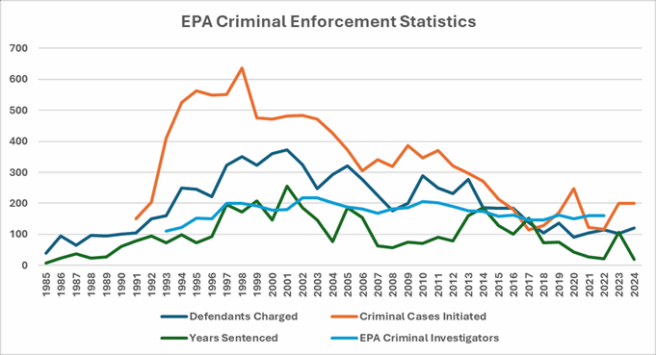
Typically, criminal conduct is accompanied by some sort of culpable mindset—the conduct needs to be intentional, willful, reckless, or knowing to be criminal conduct. But, certain federal statutes, notably in the environmental context, can be interpreted to make some actions criminal even where they lack a traditional criminal mental state, imposing “strict” criminal liability or criminal liability for simple negligence. Strict liability environmental crimes, coupled with the explosion of environmental criminal investigators mandated by the Pollution Prosecution Act of 1990, resulted in a striking increase in environmental criminal prosecutions under certain administrations. The absence of a required mental state for certain violations to be pursued criminally left prosecutorial discretion as the primary determinant of which violations were serious enough to investigate criminally and that discretion has varied across administrations and even individual prosecutors over time.

The EO seeks to both clarify the standard by which this administration chooses to evaluate potentially criminal conduct and to homogenize the prosecutorial decisions. 

Agencies Must Be Clear About Required Criminal Intent in New Regulations and Must Designate the Required Mental State for Existing Criminal Offenses

The EO notes that, going forward, agencies promulgating regulations subject to criminal enforcement should describe the exact conduct susceptible to criminal enforcement, the authorizing statutes, and the requisite knowledge or intent applicable to those offenses. That is, any new rule established by an agency that may be criminally enforced requires the agency to expressly disclose that a violation of the rule may constitute a criminal regulatory offense and should state the requisite mindset for each element of the offense.

Within a year from May 9, 2025, agencies must issue a report to the Office of Management and Budget (“OMB”) containing a list of existing enforceable criminal regulatory offenses that explains the possible penalties for said offenses as well as the applicable mindset or knowledge needed to commit them. This report will be posted to the agency’s webpage and updated at least once a year. If an offense is not mentioned in the report, the agency is “strongly discouraged” from imposing criminal penalties. The agency must consider if an offense is in its report before making a criminal referral, and the attorney general must consider this before initiating a criminal investigation or criminal proceedings. Also, the EO requires agencies to review their existing regulations to assess whether the applicable mental state requirements for criminal regulatory offenses are appropriate, which must be done by report within 30 days after submitting the original OMB report. This second report should present a plan, if consistent with the agency’s statutory authority, to adopt a “generally applicable” mental state requirement that applies unless a specific regulation states an alternative requirement.

Lastly, after consulting with the attorney general, agencies must publish guidance in the Federal Register expressing their plan to address criminally enforceable offenses. The EO requires each agency publishing guidance to make clear that it will consider the following when deciding whether to refer alleged violations of criminal regulatory offenses to the Department of Justice: the risk of harm caused by the offense; the potential gain for the person committing the offense; whether the person committing the offense had knowledge or expertise of the regulation at issue; and any evidence of the alleged perpetrator’s general awareness of the unlawfulness of his conduct and if he had knowledge of the regulation itself.   The EO criticizes the large number of regulatory crimes that are strict liability offenses, noting that likely not even “those charged with enforcing our criminal laws at the Department of Justice … know[] how many separate criminal offenses are contained in the Code of Federal Regulations[.]” The EO then presents the issue with this framework by explaining that it is an “absurd and unjust” concept that permits the “weaponization” of these regulatory offenses by government officials. Accordingly, the EO establishes a clear directive in response: “Criminal enforcement of criminal regulatory offenses is disfavored” and “is most appropriate for persons who know or can be presumed to know what is prohibited or required by the regulation and willingly choose not to comply.” This directive demonstrates a notable change in direction that the current administration is taking with respect to criminal enforcement of regulatory offenses, and the regulated community should stay tuned for further updates on this topic.

For further questions regarding this topic, contact Liskow attorneys Greg Johnson, Clare Bienvenu, Sean Toomey, and Colin North, and visit the Louisiana Industrial Insights Hub for further updates.

Blogs

Changes in Approach to Criminal Liability: Trump’s Executive Order Regarding Criminal Regulatory Offenses

July 9, 20254 minute read

Featured Image


On May 9, 2025, the Trump Administration published an executive order (“EO”), titled “Fighting Overcriminalization in Federal Regulations,” that targets criminal regulatory offenses subject to strict liability, or liability that attaches without a required criminal mindset. The EO states that strict liability offenses are “generally disfavored,” and encourages agencies to consider civil or administrative, rather than criminal, enforcement of strict liability offenses. The EO further explains that prosecution of criminal regulatory offenses is “most appropriate” when “a putative defendant is alleged to have known his conduct was unlawful.”

Typically, criminal conduct is accompanied by some sort of culpable mindset—the conduct needs to be intentional, willful, reckless, or knowing to be criminal conduct. But, certain federal statutes, notably in the environmental context, can be interpreted to make some actions criminal even where they lack a traditional criminal mental state, imposing “strict” criminal liability or criminal liability for simple negligence. Strict liability environmental crimes, coupled with the explosion of environmental criminal investigators mandated by the Pollution Prosecution Act of 1990, resulted in a striking increase in environmental criminal prosecutions under certain administrations. The absence of a required mental state for certain violations to be pursued criminally left prosecutorial discretion as the primary determinant of which violations were serious enough to investigate criminally and that discretion has varied across administrations and even individual prosecutors over time.

The EO seeks to both clarify the standard by which this administration chooses to evaluate potentially criminal conduct and to homogenize the prosecutorial decisions. 

Agencies Must Be Clear About Required Criminal Intent in New Regulations and Must Designate the Required Mental State for Existing Criminal Offenses

The EO notes that, going forward, agencies promulgating regulations subject to criminal enforcement should describe the exact conduct susceptible to criminal enforcement, the authorizing statutes, and the requisite knowledge or intent applicable to those offenses. That is, any new rule established by an agency that may be criminally enforced requires the agency to expressly disclose that a violation of the rule may constitute a criminal regulatory offense and should state the requisite mindset for each element of the offense.

Within a year from May 9, 2025, agencies must issue a report to the Office of Management and Budget (“OMB”) containing a list of existing enforceable criminal regulatory offenses that explains the possible penalties for said offenses as well as the applicable mindset or knowledge needed to commit them. This report will be posted to the agency’s webpage and updated at least once a year. If an offense is not mentioned in the report, the agency is “strongly discouraged” from imposing criminal penalties. The agency must consider if an offense is in its report before making a criminal referral, and the attorney general must consider this before initiating a criminal investigation or criminal proceedings. Also, the EO requires agencies to review their existing regulations to assess whether the applicable mental state requirements for criminal regulatory offenses are appropriate, which must be done by report within 30 days after submitting the original OMB report. This second report should present a plan, if consistent with the agency’s statutory authority, to adopt a “generally applicable” mental state requirement that applies unless a specific regulation states an alternative requirement.

Lastly, after consulting with the attorney general, agencies must publish guidance in the Federal Register expressing their plan to address criminally enforceable offenses. The EO requires each agency publishing guidance to make clear that it will consider the following when deciding whether to refer alleged violations of criminal regulatory offenses to the Department of Justice: the risk of harm caused by the offense; the potential gain for the person committing the offense; whether the person committing the offense had knowledge or expertise of the regulation at issue; and any evidence of the alleged perpetrator’s general awareness of the unlawfulness of his conduct and if he had knowledge of the regulation itself.   The EO criticizes the large number of regulatory crimes that are strict liability offenses, noting that likely not even “those charged with enforcing our criminal laws at the Department of Justice … know[] how many separate criminal offenses are contained in the Code of Federal Regulations[.]” The EO then presents the issue with this framework by explaining that it is an “absurd and unjust” concept that permits the “weaponization” of these regulatory offenses by government officials. Accordingly, the EO establishes a clear directive in response: “Criminal enforcement of criminal regulatory offenses is disfavored” and “is most appropriate for persons who know or can be presumed to know what is prohibited or required by the regulation and willingly choose not to comply.” This directive demonstrates a notable change in direction that the current administration is taking with respect to criminal enforcement of regulatory offenses, and the regulated community should stay tuned for further updates on this topic.

For further questions regarding this topic, contact Liskow attorneys Greg Johnson, Clare Bienvenu, Sean Toomey, and Colin North, and visit the Louisiana Industrial Insights Hub for further updates.

Blogs

New Louisiana Renewable Energy Law Emphasizes Solar Facility Siting with Carve Out for Parishes

July 8, 2025less than a minute

Louisiana has a new renewable energy law on the books, Act No. 279, set to take effect on August 1, 2025. It provides for the regulation of solar facilities, renewable energy batteries, and onshore wind projects, all under the permitting authority of the Louisiana Department of Energy and Natural Resources (LDENR). The solar facility piece of the legislation comes in response to several parishes grappling with recent divisions over large-scale solar project proposals. Act No. 279 is notable in that it grants the state permitting authority and mandates solar project siting requirements, yet it carves out an exception whereby parish governments may elect to impose their own, potentially more restrictive, siting requirements.

Read the full summary of requirements on Liskow’s The Energy Law Blog here.

Blogs

New Louisiana Renewable Energy Law Emphasizes Solar Facility Siting with Carve Out for Parishes

July 8, 20253 minute read

Louisiana has a new renewable energy law on the books, Act No. 279, set to take effect on August 1, 2025. It provides for the regulation of solar facilities, renewable energy batteries, and onshore wind projects, all under the permitting authority of the Louisiana Department of Energy and Natural Resources (LDENR). The solar facility piece of the legislation comes in response to several parishes grappling with recent divisions over large-scale solar project proposals. Act No. 279 is notable in that it grants the state permitting authority and mandates solar project siting requirements, yet it carves out an exception whereby parish governments may elect to impose their own, potentially more restrictive, siting requirements. A summary of the new requirements for each renewable energy category is as follows.

Solar Facilities

Any solar power generation project with a footprint of 75 acres or more must obtain a permit from LDENR. In addition, the Department of Agriculture and Forestry and the Department of Wildlife and Fisheries may weigh in and comment on the project permit.

The new law also contains siting requirements related to setbacks and noise levels that apply to solar facilities with a footprint of 75 acres or more and that begin construction after January 1, 2026. However, there are notable exceptions to these siting requirements:

  • Parish governments that create their own siting requirements can opt out of the state siting requirements.
  • Facilities located completely within an industrial-zoned area or a Louisiana Economic Development-certified site are excepted from the siting requirements.
  • Residential property owners may opt out of certain siting requirements under a written agreement with the solar project’s operator.

The new law’s setback requirements are generally 300-feet from adjacent residential property lines; 100-feet from the ordinary low watermark of natural and navigable waterways; and 50-feet from the edge of public roads. Additional vegetative barrier requirements were also adopted. In addition, the act prohibits noise levels greater than 10 A-weighted decibels (dbA) above the pre-project operation ambient noise level at the project’s property line.

Renewable Energy Batteries

The new law requires that any renewable energy storage facility obtain a permit from LDENR prior to battery installation. Proof of financial security and a decommissioning plan are also required. LDENR has been directed to promulgate rules to implement these requirements by August 31, 2026.

Onshore Wind Energy

The new law prohibits the construction or completion of any onshore wind project without a permit from LDENR. Proof of financial security and a decommissioning plan are required as part of the permitting process. LDENR has been directed to promulgate rules to implement these requirements by August 31, 2026. The law applies to wind turbines that are land-based and that are located in inland water bodies.

Act No. 279 sets into motion new permitting requirements for renewable energy in Louisiana, granting LDENR the state permitting authority. With respect to solar, the act paves the way for parish governments to exercise control over project siting by opting out of the state requirements. The act does not speak to the nature of parish requirements, and parish governments therefore have leeway to craft their siting requirements to be more restrictive. As a result, it will be important to monitor the extent to which new parish-level ordinances are enacted as a counter to Act No. 279, as well as how previously adopted parish ordinances interact with Act No. 279. For more information on renewable energy transactions and approvals at both the state and local levels, please contact Liskow attorneys Neil Abramson, Paul Kitziger, and Clare Bienvenu and visit our Environmental Regulatory practice page.

Blogs

  • « Go to Previous Page
  • Page 1
  • Interim pages omitted …
  • Page 18
  • Page 19
  • Page 20
  • Page 21
  • Page 22
  • Interim pages omitted …
  • Page 185
  • Go to Next Page »

Primary Sidebar

Recent Posts

  • Louisiana Makes DOE’s Nuclear Shortlist
  • Louisiana Rewrites the Rules of Getting Paid: What Act 822 of 2026 Means for Companies Involved in Industrial Construction
  • House Advances Sweeping Maritime Reforms in FY27 Defense Bill
  • Establishment of the Marine Minerals Administration
  • The Foundation for Natural Resources and Energy Law Elects Jana Grauberger as President

Categories

  • Blogs
  • Events
  • Insights
  • News
Liskow & Lewis, APLC
Arrow Icon

future-focused

  • Baton Rouge
  • Houston
  • Lafayette
  • New Orleans
  • New York City
  • © 2026 Liskow & Lewis, APLC
  • Sitemap
  • Disclaimer
  • Employee Login
Site by
We use cookies on our website to give you the most relevant experience by remembering your preferences and repeat visits. By clicking “Accept All”, you consent to the use of ALL the cookies. However, you may visit "Cookie Settings" to provide a controlled consent.
Cookie SettingsAccept All
Manage consent

Privacy Overview

This website uses cookies to improve your experience while you navigate through the website. Out of these, the cookies that are categorized as necessary are stored on your browser as they are essential for the working of basic functionalities of the website. We also use third-party cookies that help us analyze and understand how you use this website. These cookies will be stored in your browser only with your consent. You also have the option to opt-out of these cookies. But opting out of some of these cookies may affect your browsing experience.
Necessary
Always Enabled
Necessary cookies are absolutely essential for the website to function properly. These cookies ensure basic functionalities and security features of the website, anonymously.
CookieDurationDescription
cookielawinfo-checkbox-analytics11 monthsThis cookie is set by GDPR Cookie Consent plugin. The cookie is used to store the user consent for the cookies in the category "Analytics".
cookielawinfo-checkbox-functional11 monthsThe cookie is set by GDPR cookie consent to record the user consent for the cookies in the category "Functional".
cookielawinfo-checkbox-necessary11 monthsThis cookie is set by GDPR Cookie Consent plugin. The cookies is used to store the user consent for the cookies in the category "Necessary".
cookielawinfo-checkbox-others11 monthsThis cookie is set by GDPR Cookie Consent plugin. The cookie is used to store the user consent for the cookies in the category "Other.
cookielawinfo-checkbox-performance11 monthsThis cookie is set by GDPR Cookie Consent plugin. The cookie is used to store the user consent for the cookies in the category "Performance".
viewed_cookie_policy11 monthsThe cookie is set by the GDPR Cookie Consent plugin and is used to store whether or not user has consented to the use of cookies. It does not store any personal data.
Functional
Functional cookies help to perform certain functionalities like sharing the content of the website on social media platforms, collect feedbacks, and other third-party features.
Performance
Performance cookies are used to understand and analyze the key performance indexes of the website which helps in delivering a better user experience for the visitors.
Analytics
Analytical cookies are used to understand how visitors interact with the website. These cookies help provide information on metrics the number of visitors, bounce rate, traffic source, etc.
Advertisement
Advertisement cookies are used to provide visitors with relevant ads and marketing campaigns. These cookies track visitors across websites and collect information to provide customized ads.
Others
Other uncategorized cookies are those that are being analyzed and have not been classified into a category as yet.
SAVE & ACCEPT
  • Team
  • Practices
  • Insights
  • Blogs
  • Offices
  • Pro Bono
  • About Us
  • Careers
  • DEI
  • The Energy Law Blog
  • Gulf Coast Business Law Blog
  • The Maritime Law Blog