
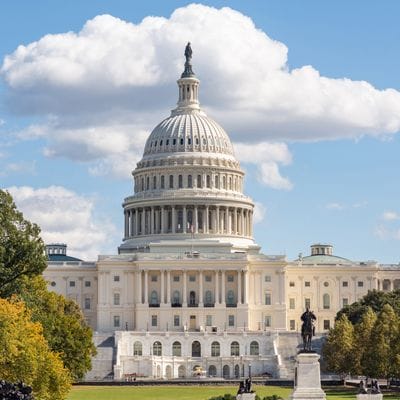
On November 9, 2026, the U.S. Senate voted 73-25 to advance the Bipartisan American Affordability and Jobs Act of 2026 (BAAJA), clearing an important hurdle and setting the stage for a final vote on the Senate Floor on comprehensive federal permitting reform legislation. Sponsored by Senators Shelley Moore Capito (R-WV), Mike Lee (R-UT), Sheldon Whitehouse (D-RI), and Martin Heinrich (D-NM), the BAAJA seeks to modernize federal permitting processes, reduce regulatory delays, and provide greater certainty for infrastructure and energy projects.
A central component of the BAAJA is reforming the federal environmental review and permitting process under several core environmental statutes. The legislation proposes several changes intended to address lengthy environmental reviews, permitting delays, and litigation that can affect infrastructure and energy development. Among its most significant provisions, the BAAJA would:
- Shorten judicial review window: Establish a 150-day deadline for filing certain legal challenges under the National Environmental Policy Act (NEPA), Clean Water Act, and Endangered Species Act. The BAAJA would also generally limit lawsuits to parties who raised their issues in sufficiently detailed comments during the public comment period.
- Limit judicial remedies: Generally limit courts from vacating federal authorizations or issuing injunctions based on NEPA violations. Instead, courts would remand matters to agencies for further consideration within a specified timeframe.
- Improve permitting efficiency: Provide additional deadlines and procedural requirements for environmental review and improve coordination among federal agencies. For instance, the BAAJA would keep NEPA’s existing one-year deadline for environmental assessments and two-year deadline for environmental impact statements. If passed, however, participating federal agencies would then have 90 days, and nonparticipating agencies 120 days, to decide all outstanding authorizations for the project.
The BAAJA’s advancement is particularly notable because it represents a bipartisan agreement between Republican and Democratic lawmakers. Bipartisan agreement on significant permitting legislation is not a common achievement, making this collaboration an important development. It also reflects growing recognition that federal permitting delays affect projects across multiple sectors and that meaningful reform requires cooperation.
Following the November 9 vote, the Senate is now considering amendments, with a final vote expected during the week of November 16, 2026. The coming days will be critical in determining whether the Senate can reach agreement and advance the bipartisan permitting reform legislation.
For more information, contact Liskow attorneys Greg Johnson, Clare Bienvenu, Emily von Qualen, and Colin North, and visit Liskow’s The Louisiana Industrial Insights Hub to stay up-to-date on further developments.
"Republicans and Democrats alike recognize the need for reforms to unlock investment to build projects that are important to our states. On both sides of the aisle, we understand that our constituents need lower costs and good jobs, communities need economic investment, businesses need certainty, and America needs to build. These are not partisan ideals. They are American principles." ~ Senator Moore