
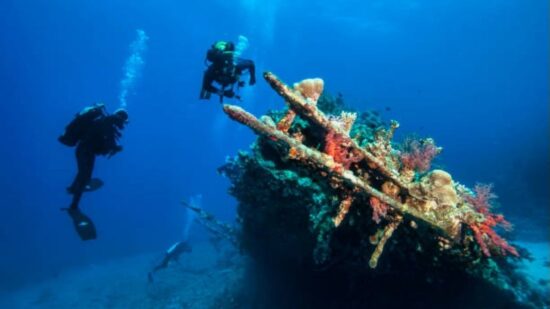
Part 1: Finders Keepers? The Law of Salvage vs. The Law of Finds
Ever-evolving technology is allowing more and more shipwrecks to be discovered and salvaged. But what law governs the search for and recovery of artifacts and shipwrecks? How does the would be treasure hunter obtain a legal right to the salvaged treasure? Join us in our series on the legal issues arising out of the discovery and recovery of shipwrecks and other artifacts.
Once a shipwreck is discovered, the first question for the treasure hunter and would be salvor is how to obtain the right to salvage the wreck and prevent others from doing the same? As a preliminary matter, claims relating to the recovery of sunken property are maritime claims arising under maritime jurisdiction. The recovery of sunken ships and treasure arises under two separate but related maritime laws. The first is the law of maritime salvage, and the second is the law of finds. The laws cannot be applied simultaneously. They serve different purposes and promote different behaviors. Fairport Intern. Exploration, Inc. v. Shipwrecked Vessel, Captain Lawrence, 177 F.3d 491, 498 (6th Cir. 1999).
Salvage law has a long and ancient history, but in short, salvage relates to the voluntary rescue of property in danger at sea. A salvor who acts voluntarily gains exclusive “possession” of the salvaged property to secure the salvor’s claim for a salvage award, which is based on the value of the property salvaged. This is an in rem claim on the property that is salvaged—in other words, the property salvaged is personified as owing the liability. While a court can award the treasure salvor an “in kind” salvage award (i.e. the actual salvaged property), that result is not guaranteed. And a salvage claim does not automatically entitle the salvor to the treasure he recovers. However, a salvor can be made the “salvor in possession” and obtain the exclusive rights to salvage the ship, excluding all others from attempting to salvage the property. There are of course limits to this exclusive right, as we will discuss in future blog posts.
By contrast, the law of finds allows a finder to acquire title to abandoned property by “reducing the property to his or her possession.” In other words, “finders keepers”—whomever obtains physical possession of the treasure can obtain the right to keep it under the law of finds. But unlike the law of salvage, the law of finds does not entitle the finder to exclude all others from seeking the same property. To establish a claim under the law of finds the “finder” must show: “(1) the intent to reduce property to possession, (2) actual or constructive possession of the property, and (3) that the property is either unowned or abandoned.” See Titantic III, 435 F.3d at 532 n.3.
Thus, the treasure hunter must make a choice: seek an application of the law of finds and race to find the treasure before anyone else does; or obtain salvage rights to the wreck and exclude all others from salvaging the same property, but risk not obtaining an “in kind” award of the treasure.
The law of finds is disfavored, and there is a presumption that property lost at sea is not abandoned—it still has an owner. Element (3) to the application of the law of finds raises an interesting question, when is a thing lost at sea “unowned” or abandoned? The traditional presumption was that title remains with the true owner regardless of how long the wreck has been underwater. The clear exception to this is “ancient shipwrecks,” where no owner appears in court to claim the wreck. See Columbus-America Discovery Group v. Atlantic Mutual Ins. Co., 974 F.2d 450 (4th Cir. 1992). But, the definition of “ancient” is open to interpretation. Insurers who paid out on very old cargo claims have appeared in cases where the treasure hunter sought the application of the law of finds for ships that were lost 150 years ago. Columbus-America Discovery Group v. Atlantic Mutual Ins. Co., 974 F.2d 450 (remanding case for more discovery where insurers had intervened in suit seeking application of law of finds to gold from a 150 year old shipwreck, the SS CENTRAL AMERICA). By contrast, in perhaps one of the most famous cases of treasure salvage, the Atocha, a Spanish treasure ship lost in a hurricane in 1622 was deemed to be an abandoned vessel such that the law of finds was correctly applied. These are all considerations when determining whether the treasure hunter should seek a court order that they are the salvor-in-possession, or whether the treasure hunter should wait and seek the application of the law of finds.
Next up in our series – how does one obtain jurisdiction over the wreck and what happens if the wreck is not within the jurisdiction of the United States?