
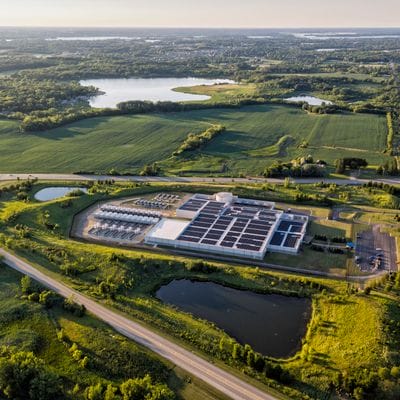
On October 30, 2026, the U.S. District Court for the Northern District of Mississippi denied x.AI Corp. and MZX Tech LLC’s motion to dismiss a Clean Air Act (CAA) lawsuit filed by the National Association for the Advancement of Colored People (NAACP) and the Mississippi State Conference of the NAACP. The court rejected, among other arguments, x.AI’s contention that the natural gas-fired combustion turbines mounted on flatbed trailers that are powering its data center qualified as mobile sources exempt from stationary source air permitting requirements. This decision arrives as EPA weighs a proposed rule that would treat certain portable combustion turbines as nonroad engines subject to mobile source standards rather than as stationary sources requiring preconstruction and operating permits. Such a rule may not retroactively excuse turbines operated without permits, as alleged in the x.AI litigation, but it could allow future data center developers and operators to deploy certain portable turbines for power without stationary source permitting.
Background
In April 2026, the NAACP and the Mississippi State Conference of the NAACP filed suit claiming that x.AI Corp. and MZX Tech LLC violated the CAA and Mississippi’s State Implementation Plan (SIP) by constructing and operating, without a permit, a power plant comprised of gas-fired combustion turbines mounted on flatbed trailers. Among other defenses, x.AI argued that the turbines qualified as mobile sources under Mississippi’s SIP because they were portable and intended to remain at the site for less than 12 months. The Mississippi Department of Environmental Quality had previously issued a letter indicating that it understood the turbines qualified for the mobile source exemption.
Separately, EPA is developing a proposed rule, titled the “Nonroad Combustion Turbines Rule,” that reportedly could establish a regulatory framework for treating certain portable combustion turbines as mobile source nonroad engines, rather than stationary sources. As of early November 2026, the proposal has been submitted for White House Office of Management and Budget review, but it has yet to be formally proposed.
Court’s Holding and Potential Implications of EPA’s Rule
The court rejected x.AI’s mobile source argument based on the definitions incorporated into Mississippi’s SIP. Although the SIP does not independently define “mobile source,” the court determined that it incorporates the federal definition of the term as “a motor vehicle, nonroad engine or nonroad vehicle,” so x.AI could claim the exemption only if its turbines fit one of those categories. The court found that they did not: the turbines were neither vehicles nor nonroad engines, but “stationary combustion turbines,” because they were not self-propelled or intended to be propelled while performing their function. Additionally, the Subpart KKKK definition of “stationary combustion turbine” in 40 C.F.R. Part 60 expressly contemplates that such turbines “may be mounted on a vehicle for portability.” Because x.AI’s turbines fell within that stationary definition, the court concluded that they could not also be nonroad engines and therefore remained subject to stationary source permitting rather than the mobile source exemption.
The anticipated EPA rule presents a potentially important development in this respect. If finalized, the rule could establish a different regulatory classification for qualifying portable turbines, potentially subjecting them to a nonroad engine regulatory framework rather than an existing stationary source framework like that applied in the x.AI litigation. EPA’s anticipated rule may not resolve the issues presented in the x.AI litigation, which turns on whether turbines already operated without permits were stationary sources at the time. Prospectively, however, the rule could give data center developers and operators that deploy portable turbines a clearer basis for treating them as exempt mobile sources.
Ultimately, the court’s decision underscores that mounting combustion turbines on trailers or intending to operate them temporarily does not transform them into mobile sources under existing CAA regulations. At the same time, EPA’s anticipated rulemaking could materially affect the regulatory treatment of certain portable turbines prospectively. Data center operators, developers, and other stakeholders should monitor both the ongoing litigation and EPA’s rulemaking in order to stay informed of further updates.
For more information, contact Liskow attorneys Greg Johnson, Clare Bienvenu, Emily von Qualen, and Colin North, and visit Liskow’s The Louisiana Industrial Insights Hub to stay up-to-date on further developments.
Because the Plant is not a “mobile source” according to the federal regulations incorporated into Mississippi’s SIP, the Plant was not (and is not) exempted from permitting requirements under the Clean Air Act and Mississippi’s SIP. So, the plaintiffs’ … claims will not be dismissed.