
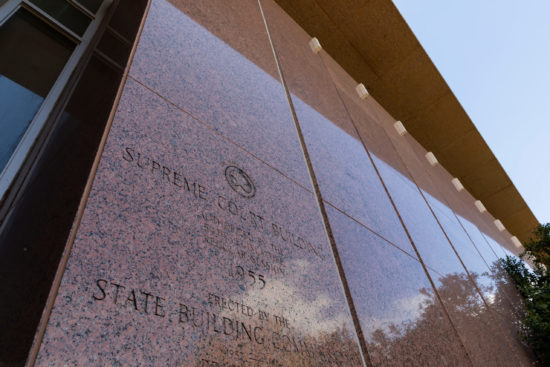
On June 16, 2023, the Supreme Court of Texas released the plurality opinion in Sarah Gregory and New Prime, Inc. v. Jaswinder Chohan, et al., __ S.W.3d ___, No. 21-0017, 2023 WL 4035886 (Tex. June 16, 2023). The Court considered the award of noneconomic damages and the standard applied in reviewing such awards and held that the jury’s discretion to make an award is limited and that noneconomic damages must be supported by evidence of the nature, duration, and severity of the injury to support both the existence and the amount of compensable loss of the type of damages claimed. Further, unsubstantiated arguments to the jury, such as comparisons of mental anguish to the cost of a fighter jet, a work of art, or miles driven by a defendant’s vehicles, are improper and lack a connection to the actual mental anguish claimed.
This case arises from a fatal accident on an icy, unlit stretch of highway near Amarillo, Texas. An eighteen-wheeler driven by Sarah Gregory jackknifed across lanes of traffic, and the resulting pileup caused four deaths. The widow and family of a truck driver who was killed in the accident brought a wrongful death action against Gregory and New Prime, Inc. The jury awarded approximately $16.8 million to the truck driver’s family. Noneconomic damages awarded to six family members for past and future mental anguish and loss of companionship accounted for over $15 million of the total verdict. The defendants’ appeal to the Fifth Court of Appeals, Dallas, Texas, challenging the size of the noneconomic damages award as “flagrantly outrageous, extravagant, and so excessive that it shocks the judicial conscience” failed. The Texas Supreme Court reviewed and reversed the judgment of the court of appeals and remanded the case for a new trial.
In Texas, “noneconomic damages” include all compensatory, nonpecuniary losses of any kind other than exemplary damages, including damages awarded for the purpose of compensating a claimant for physical pain and suffering, mental or emotional pain or anguish, loss of consortium, disfigurement, physical impairment, loss of companionship and society, inconvenience, loss of enjoyment of life, and injury to reputation. Tex. Civ. Prac. & Rem. Code § 41.001 (12).
In this case, the Court emphasized that when reviewing mental anguish damages, “[t]here must be evidence that the amount found is fair and reasonable compensation, just as there must be evidence to support any other jury finding.” Saenz v. Fidelity & Guar. Ins. Underwriters, 925 S.W.2d 607, 614 (Tex. 1996). Rather than limit the review of noneconomic damages to elastic, impractical standards like the “shocks the conscience” test, the Court found that its precedent requires evidence of both the “existence of compensable mental anguish” and “evidence to justify the amount awarded.” Id. “While the impossibility of any exact evaluation of mental anguish requires that juries be given a measure of discretion in finding damages, that discretion is limited.” Bentley v. Bunton, 94 S.W.3d 561, 606 (quoting Saenz, 925 S.W.2d at 614). “Juries cannot simply pick a number and put it in the blank.” Id. The Court also made clear that, although the magnitude of mental anguish may often be heightened in wrongful death cases, the Court’s precedent is applicable in wrongful death cases and the jury’s task is the same: “[t]hey must find an amount that, in the standard language of the jury charge, ‘would fairly and reasonably compensate’ for the loss.” A wrongful death case is no different in this regard. As such, the Court holds that an award requires legally sufficient “evidence of the nature, duration, and severity” of mental anguish to support both the existence and the amount of compensable loss. Saenz, 925 S.W.2d at 614; Bentley, 94 S.W.3d at 606.
To guard against arbitrary outcomes and to ensure that damages awards are genuinely compensatory, the Court held that the plaintiff in a wrongful death case should be required to demonstrate a rational connection, grounded in the evidence, between the injuries suffered and the dollar amount awarded. And while the Court found that plaintiffs produced and the court of appeals recounted sufficient evidence demonstrating the existence of compensable mental anguish and loss of companionship suffered by the trucker’s family, nothing in the record or in plaintiffs’ arguments demonstrated a rational connection between the injuries suffered and the amount awarded.
Specifically, the Court took issue with plaintiffs’ counsel’s arguments to the jury regarding the proper amount of noneconomic damages. The Court defined this ‘unsubstantiated anchoring’ as “a tactic whereby attorneys suggest damages amounts by reference to objects or values with no rational connection to the facts of the case. The ‘unsubstantiated anchoring’ in this case included references to the price of fighter jets, the value of artwork, and the number of annual miles driven by New Prime’s trucks. The Court found that these type of arguments were the opposite of rationally connected, and instead improperly encouraged the jury to base an ostensibly compensatory award on considerations without connection to the rational compensation of the truck driver’s family. The Court also cited Texas Rule of Civil Procedure 269(e), which restrains counsel’s argument to the jury by stating that “[c]ounsel shall be required to confine the argument strictly to the evidence and to the arguments of opposing counsel.” Courts have an obligation to prevent improper jury argument and “will not be required to wait for objections to be made when the rules as to arguments are violated.” Tex. R. Civ. P. 269(g).
The Texas Supreme Court reversed the judgment of the court of appeals and remanded for a new trial. This case stands as a reminder that noneconomic damages cannot be awarded free of restraints and must relate to the injury they are designed to compensate, i.e., be grounded in the evidence and reflect a rational connection between the existence of a compensable injury and the amount awarded to compensate for the injury. However, the Court did not formulate a damage cap or give examples as to what type of evidence would be appropriate to establish and support a “rational connection,” a point noted by Justice Devine’s concurrence.
https://www.txcourts.gov/media/1456667/210017.pdf
Disclaimer: This Blog/Web Site is made available by the law firm of Liskow & Lewis, APLC (“Liskow & Lewis”) and the individual Liskow & Lewis lawyers posting to this site for educational purposes and to give you general information and a general understanding of the law only, not to provide specific legal advice as to an identified problem or issue. By using this blog site you understand and acknowledge that there is no attorney-client relationship formed between you and Liskow & Lewis and/or the individual Liskow & Lewis lawyers posting to this site by virtue of your using this site. The Blog/Web Site should not be used as a substitute for legal advice from a licensed professional attorney in your state regarding a particular matter.
Privacy Policy: By subscribing to Liskow & Lewis’ E-Communications, you will receive articles and blogs with insight and analysis of legal issues that may impact your industry. Communications include firm news, insights, and events. To receive information from Liskow & Lewis, your information will be kept in a secured contact database. If at any time you would like to unsubscribe, please use the link located at the bottom of every email that you receive.