
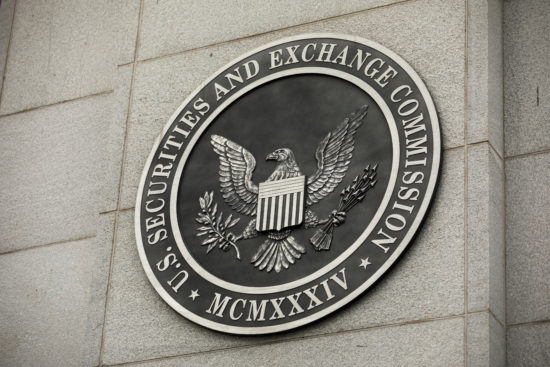
The Securities and Exchange Commission proposed – by a 3-1 vote – a comprehensive new set of rules (the “proposals”) in an effort to enhance and standardize the climate-related disclosures provided by public companies.[1] According to SEC Chair Gary Gensler, the proposals come in the wake of increasing investor demand for more information about climate risks affecting the businesses they invest in as the SEC aims to “provide investors with consistent, comparable, and decision-useful information for making their investment decisions, and…consistent and clear reporting obligations for issuers.”[2]
The proposals expand the universe of what must be disclosed as well as the information required within each category of disclosures. Certain disclosures will be included in a company’s registration statements and periodic reports, including information as to actual and potential climate-related risks that are reasonably likely to have a material impact on their business, results of operations, or financial condition.[3] Companies will be required to disclose physical risks and financial impacts of climate-related events and transition activities and, unless the aggregate impact is below the threshold, companies will be required to include this data on each line item of their consolidated financial statements. Additionally, companies that have already announced climate-related targets or goals will be required to provide more specific and detailed information including the scope of activities and emissions included in the goals, the unit of measurements, interim targets, annual transition plan updates, and descriptions of actions taken to achieve the stated goals.
Although still too early to fully define the liability risks for registrants, there certainly exist such risks contained within the proposals in their current form . In addition to companies having to file climate-related disclosures – subjecting them to potential liability under Section 18 of the Exchange Act or Section 11 of the Securities Act – the commercial litigation arena could see an uptick an activity. Litigation between companies and their vendors, suppliers, and/or other entities they do business with could increase – based, in part, on the Scope 3 emissions framework described below. Further, as companies reveal more, previously unknown information, this opens the door for increased consumer and shareholder litigation.
Most notable are the provisions as to the disclosure of a company’s direct greenhouse gas (GHG) emissions and indirect GHG emissions. Scope 1 (direct emissions) and Scope 2 (emissions from purchased electricity and other forms of energy) are relatively straightforward in terms of defining what must be disclosed and the familiar methods by which to collect the relevant data. The challenges exist with respect to the disclosure of Scope 3 emissions, which are defined as all indirect GHG emissions not otherwise included in a registrant’s Scope 2 emissions that occur in the upstream and downstream activities of a registrant’s value chain.[4] Scope 3 upstream emissions include transportation of goods to the registrant and employee business travel/commuting while downstream emissions include the use of registrant’s products and end of life treatment of sold products, among others.
The category of Scope 3 emissions disclosures are unavoidably the most susceptible to imprecise calculations and assumptions as a result of a company’s lack of direct ownership or control over the entities producing these emissions. The resulting issues include a registrant’s potential third party liability for the emissions of another, the complexity of the Scope 3 emissions materiality assessment, and the difficulties inherent in calculations of indirect emissions and third party data/information collection.
Among the topics of debate raised since the proposals were published are the SEC’s authority within the environmental regulation arena, the significantly higher costs required to ensure accuracy of the data and avoid liability, the analyses and calculations forming the basis of certain disclosures, the increased liability, and several others. The period for public comment is open 30 days after the date of publication in the Federal Register or May 20, 2022, whichever period is longer, with the SEC aiming to finalize the rule by the end of 2022. For a complete description of the proposals’ background, other key provisions, timing, and filing framework, see https://www.sec.gov/files/33-11042-fact-sheet.pdf.
[1] The proposals are titled, “The Enhancement and Standardization of Climate-Related Disclosures for Investors.”
[2] SEC Press Release, Statement from SEC Chair Gary Gensler, https://www.sec.gov/news/press-release/2022-46.
[3] Id. (https://www.sec.gov/news/press-release/2022-46).
[4] See proposed 17 CFR 229.1500(r).
Disclaimer: This Blog/Web Site is made available by the law firm of Liskow & Lewis, APLC (“Liskow & Lewis”) and the individual Liskow & Lewis lawyers posting to this site for educational purposes and to give you general information and a general understanding of the law only, not to provide specific legal advice as to an identified problem or issue. By using this blog site you understand and acknowledge that there is no attorney client relationship formed between you and Liskow & Lewis and/or the individual Liskow & Lewis lawyers posting to this site by virtue of your using this site. The Blog/Web Site should not be used as a substitute for legal advice from a licensed professional attorney in your state regarding a particular matter.
Privacy Policy: By subscribing to Liskow & Lewis’ E-Communications, you will receive articles and blogs with insight and analysis of legal issues that may impact your industry. Communications include firm news, insights, and events. To receive information from Liskow & Lewis, your information will be kept in a secured contact database. If at any time you would like to unsubscribe, please use the link located at the bottom of every email that you receive.