
• Skip to content
  • Skip to primary sidebar

liskow_lewis_white_new

future-focused

  • Team
  • Practices
  • Insights
  • Blogs
    • Energy Law Blog
    • Gulf Coast Business Law Blog
    • Maritime Law Blog
    • Louisiana Industrial Insights Hub
Blogs

Proposed Rule Changes Would Affect Groundwater Monitoring at Legacy Oilfield Sites

09.09.26 | 2 minute read

Featured Image

The Louisiana Department of Conservation and Energy (C&E) recently released proposed rule changes regarding groundwater management, consolidating existing water well rules into Title 43, Part VI of the La. Administrative Code and proposing new rules that may affect current practices for evaluating groundwater at legacy oilfield sites. 

Separately Evaluating Groundwater Zones

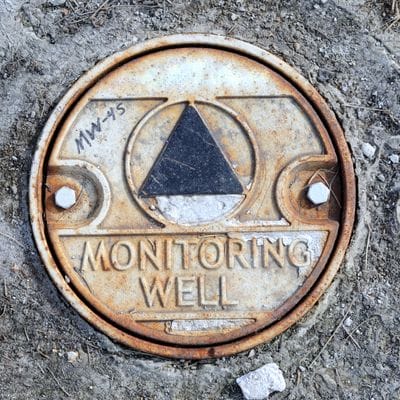
To investigate potential impacts to groundwater at an oilfield site, an interested party typically installs monitoring wells to sample and test water at various depths below the land surface. Under the proposed revisions, monitoring wells would be classified within a new, broader category of “environmental wells,” defined as water wells “usually installed in an area of known or suspected contamination used to obtain hydrologic data, water quality data, information on water resources of an area, or to recover or treat contaminated groundwater.” 

Environmental wells and other water wells contain screens set at certain depths to allow the influx of groundwater. The proposed rules contain a new provision stating that no water well or environmental well may have a screen that extends across more than one distinct aquifer layer, and that connecting two or more distinct water-bearing zones is “strictly prohibited.” As a result, parties would be required to separately evaluate each distinct groundwater zone by installing a separate screen or well for each zone.

Plugging Environmental Wells

The pending revisions also add rules for plugging environmental wells. Existing regulations require that all abandoned wells be plugged within 90 days of their abandonment. Under the proposed revisions, environmental wells would be considered abandoned on the earliest date on which “they no longer serve a purpose, they are damaged beyond repair or the project they are associated with is terminated,” whereupon the owner of the well would be responsible for plugging the environmental well within 30 days. This would appear to clarify that each monitoring well installed in conjunction with the investigation of a legacy oilfield site must be promptly plugged by the party who installed it upon the conclusion of the investigation and any associated agency or court proceedings.     

Other Proposed Changes

In addition to the changes discussed above, C&E is proposing changes on other topics, such as management of groundwater resources by lowering the threshold for “large volume” water wells from 1,500 to 300 gallons per minute, thus expanding the water-producing wells that would be subject to metering, monitoring, and production limits. The proposed changes would also allow C&E to create “Areas of Investigation” in order to collect data on certain aquifers that could potentially be later designated as “Areas of Groundwater Concern” under La. R.S. 30:3097.6 of existing law, which focuses on aquifer supply and quality. C&E is soliciting comments on these and other proposed groundwater management rule changes through October 15, 2026, and you can download the full draft of the proposed changes here.

For more information about this update, contact Liskow attorneys Amy Lee and Joe Heaton, and visit Liskow’s Energy – Litigation and Energy – Regulatory practice pages. 

Primary Sidebar

Related Practices

  • Energy – Litigation
  • Energy – Regulatory
  • Rulemaking

Related Team

  • Media item displaying: Amy Allums Lee

    Amy Allums Lee

    Shareholder

    Lafayette
    337.267.2366337.267.2366
  • Media item displaying: Joe Heaton

    Joe Heaton

    Associate

    Lafayette
    337.267.2314337.267.2314
Liskow & Lewis, APLC
Arrow Icon

future-focused

  • Baton Rouge
  • Houston
  • Lafayette
  • New Orleans
  • New York City
  • New Bedford
  • © 2026 Liskow & Lewis, APLC
  • Sitemap
  • Disclaimer
  • Employee Login
Site by
We use cookies on our website to give you the most relevant experience by remembering your preferences and repeat visits. By clicking “Accept All”, you consent to the use of ALL the cookies. However, you may visit "Cookie Settings" to provide a controlled consent.
Cookie SettingsAccept All
Manage consent

Privacy Overview

This website uses cookies to improve your experience while you navigate through the website. Out of these, the cookies that are categorized as necessary are stored on your browser as they are essential for the working of basic functionalities of the website. We also use third-party cookies that help us analyze and understand how you use this website. These cookies will be stored in your browser only with your consent. You also have the option to opt-out of these cookies. But opting out of some of these cookies may affect your browsing experience.
Necessary
Always Enabled
Necessary cookies are absolutely essential for the website to function properly. These cookies ensure basic functionalities and security features of the website, anonymously.
CookieDurationDescription
cookielawinfo-checkbox-analytics11 monthsThis cookie is set by GDPR Cookie Consent plugin. The cookie is used to store the user consent for the cookies in the category "Analytics".
cookielawinfo-checkbox-functional11 monthsThe cookie is set by GDPR cookie consent to record the user consent for the cookies in the category "Functional".
cookielawinfo-checkbox-necessary11 monthsThis cookie is set by GDPR Cookie Consent plugin. The cookies is used to store the user consent for the cookies in the category "Necessary".
cookielawinfo-checkbox-others11 monthsThis cookie is set by GDPR Cookie Consent plugin. The cookie is used to store the user consent for the cookies in the category "Other.
cookielawinfo-checkbox-performance11 monthsThis cookie is set by GDPR Cookie Consent plugin. The cookie is used to store the user consent for the cookies in the category "Performance".
viewed_cookie_policy11 monthsThe cookie is set by the GDPR Cookie Consent plugin and is used to store whether or not user has consented to the use of cookies. It does not store any personal data.
Functional
Functional cookies help to perform certain functionalities like sharing the content of the website on social media platforms, collect feedbacks, and other third-party features.
Performance
Performance cookies are used to understand and analyze the key performance indexes of the website which helps in delivering a better user experience for the visitors.
Analytics
Analytical cookies are used to understand how visitors interact with the website. These cookies help provide information on metrics the number of visitors, bounce rate, traffic source, etc.
Advertisement
Advertisement cookies are used to provide visitors with relevant ads and marketing campaigns. These cookies track visitors across websites and collect information to provide customized ads.
Others
Other uncategorized cookies are those that are being analyzed and have not been classified into a category as yet.
SAVE & ACCEPT
  • Team
  • Practices
  • Insights
  • Blogs
  • Offices
  • Pro Bono
  • About Us
  • Careers
  • DEI
  • The Energy Law Blog
  • Gulf Coast Business Law Blog
  • The Maritime Law Blog