
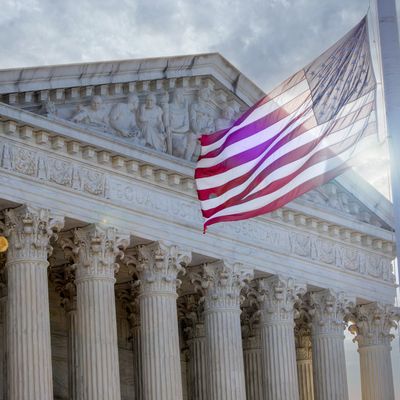
An 8-0 ruling by the Supreme Court of the United States that a lawsuit by a Louisiana parish and state agencies against Chevron belongs in federal court has cleared the way for a jurisdictional shake-up in the long-running litigation. On April 27, defendants removed most of the remaining lawsuits back to federal court. Those curious about the differences between state and federal courts may read more here.
The Louisiana lawsuits claim that common and well-known historical practices in energy development—such as dredging canals, processing oilfield fluids in earthen impoundments, or discharging produced water into coastal waters—give rise to present-day liability under a 1978 state permitting law. However, in Chevron, those same complained-of activities occurred during World War II, where the oil produced using those practices was also refined under contract with the federal government to supply aviation gasoline. This specialized fuel—and the Allies’ ability to generate it better and faster than the Axis powers—was a difference-maker in the outcome of the war.
This is the premise of the SCOTUS jurisdictional ruling. The federal officer removal statute authorizes an officer or person acting under that officer to remove state suits “for or relating to any act under color of such office.” 28 U.S.C. §1442(a)(1). All eight participating Justices agreed that the Louisiana claims implicate Chevron’s wartime production. That production “relates to” Chevron’s refining of that oil into aviation gasoline for the military, which Chevron did as a contractor for the federal government. Thus, Chevron is entitled to a federal forum.
Numerous other cases in the docket are identically situated to Chevron’s facts—including the case that reached a state court verdict against Chevron in 2025. Other cases have different permutations of relationships to wartime production. Importantly, the Supreme Court did not articulate rigid parameters for federal officer removal. It found that the Chevron case fit “comfortably within the ordinary meaning” of a suit that relates to performance of federal duties. Justice Ketanji Brown Jackson, concurring, agreed that Chevron’s facts shared a direct causal-nexus requirement, but noted her disagreement with the majority’s opinion that the federal officer removal statute “requires only an indirect relationship between the conduct targeted by the lawsuit and the asserted federal duties.” So, while Chevron’s direct relationship met the federal officer test, indirect relationships will, too. Given the pervasive development of Louisiana’s coastal oil reserves during WWII, and the fact that coastal impacts and restoration strategies do not fit neatly into any geometric borders drawn for a lawsuit, the SCOTUS opinion has broad implications for jurisdiction in the docket.
Future decisions will have to shape the more specific contours of indirect relationships sufficient to support federal officer jurisdiction. Louisiana federal courts will play a key role in this process.